Under a spreading chestnut-tree
The village smithy stands;
The smith, a mighty man is he,
With large and sinewy hands;
And the muscles of his brawny arms
Are strong as iron bands.

His hair is crisp, and black, and long,
His face is like the tan;
His brow is wet with honest sweat,
He earns whate'er he can,
And looks the whole world in the face,
For he owes not any man.

Week in, week out, from morn till night,
You can hear his bellows blow;
You can hear him swing his heavy sledge,
With measured beat and slow,
Like a sexton ringing the village bell,
When the evening sun is low.

And children coming home from school
Look in at the open door;
They love to see the flaming forge,
And hear the bellows roar,
And catch the burning sparks that fly
Like chaff from a thrashing-floor.

He goes on Sunday to the church,
And sits among his boys;
He hears the parson pray and preach,
He hears his daughter's voice,
Singing in the village choir,
And it makes his heart rejoice.

It sounds to him like her mother's voice,
Singing in Paradise!
He needs must think of her once more,
How in the grave she lies;
And with his hard, rough hand he wipes
A tear out of his eyes.

Toiling, - rejoicing, - sorrowing,
Onward through life he goes;
Each morning sees some task begin,
Each evening sees it close;
Something attempted, something done,
Has earned a night's repose.

Thanks, thanks to thee, my worthy friend,
For the lesson thou hast taught!
Thus at the flaming forge of life
Our fortunes must be wrought;
Thus on its sounding anvil shaped
Each burning deed and thought.

("The Village Blacksmith", Henry Wadsworth Longfellow, in Henry Wadsworth Longfellow: Selected Poems, 1988)
Page 12 of 46
Bivouac – the guard or watch of a whole army, as in cases of great danger of surprise or attack
“In the world’s broad field of battle,
In the bivouac of Life,
Be not like the dumb, driven cattle!
Be a hero in the strife!
Henry Wadsworth Longfellow, A Psalm of Life
WHAT THE HEART OF THE YOUNG MAN SAID TO THE PSALMIST

Tell me not, in mournful numbers,
Life is but an empty dream! -
For the soul is dead that slumbers,
And things are not what they seem.

Life is real!  Life is earnest!
And the grave is not its goal;
Dust thou art, to dust returnest,
Was not spoken of the soul.

Not enjoyment, and not sorrow,
Is our destined end or way;
But to act, that each tomorrow
Find us farther than to-day.

Art is long, and Time is fleeting,
And our hearts, though stout and brave,
Sill, like muffled drums, are beating
Funeral marches to the grave.

In the world's broad field of battle,
In the bivouac of Life,
Be not like the dumb, driven cattle!
Be a hero in the strife!

Trust no future, howe'er pleasant!
Let the dead Past bury its dead!
Act, - act in the living Present!
Heart within, and God o'erhead!

Lives of great men all remind us
We can make our lives sublime,
And, departing, leave behind us
Footprints on the sands of time;

Footprints, that perhaps another,
Sailing o'er life's solemn main,
A forlorn and shipwrecked brother,
Seeing, shall take heart again.

Let us, then, be up and doing,
With a heart for any fate;
Still achieving, still pursuing,
Learn to labor and to wait.

("Psalm of Life", Henry Wadsworth Longfellow, in Henry Wadsworth Longfellow: Selected Poems, 1988)
Pelf – money; riches; but it often conveys the idea of something ill gotten or worthless
“The writer of this legend then records
Its ghostly application in these words:
The image is the Adversary old,
Whose beckoning finger points to realms of gold,
Our lusts and passions are the downward air;
The archer, Death; the flaming jewel, Life;
Terrestrial goods, the goblet and the knife;
The knights and ladies, all whose flesh and bone
By avarice have been hardened into stone;
The clerk, the scholar whom the love of pelf
Temps from his books and from his nobler self.”
Henry Wadsworth Longfellow, Morituri Salutamus
“And, as she looked around, she saw how Death, the consoler,
Laying his hand upon many a heart, had healed it forever.”
Henry Waldsworth Longfellow, Evangeline
Before it was over
I took out a pencil and a notepad
and figured out roughly what was left -
a small box of Octobers, a handful of Aprils,

little time to waste reading a large novel
on the couch every evening,
a few candles flaming in the corners of the room.
A fishbowl of Mondays, a row of Fridays -

yet I cannot come up with anything
better than to strike a match,
settle in under a light blanket,
and open to the first sentence of Clarissa.

Look at me setting off on this long journey
through ink and tears,
through secrecy and distress,
anticipation and swordplay.

As the darkness thickens
and the morning glory puts down its trumpet,
as worms begin to sing in the garden,
and Christ looks down from the wall,

I will begin inching toward the end -
page one thousand five hundred and thirty-three
in this paperback Penguin edition,
introduction and notes by one Angus Ross.

("Birthday", Billy Collins, in Nine Horses, 2002)
What better way to spend a birthday? Engrossed in a book (old favorite or new adventure). Better than how I spent it – renewing my drivers license and running errands. But it wasn’t all in vain, because while I waited, I read this poem. And that made my birthday a little more special.
I have been neglecting this blog for several weeks, but I assure you, I am still writing. A few weeks ago, I dreamed up the premise to a novel (almost literally, for the characters came to me in the almost-dreaming state just before I fully succumbed to sleep). Since then, I have spent most of my free time writing fiction, researching the portion of history I want to write about, and pinning a multitude of writing tips to my Pinterest wall.
Sadly, I have not done a lot of reading. I did listen to The Scarlet Pimpernel again – and watched the movie too. I also listened to Cousin Phyllis by Elizabeth Gaskell. And I started two books – an audio version of Persuasion by Jane Austin and the novel The Girl With the Dragon Tattoo by Stieg Larsson. I’m not done with those, but I suppose I have done a little reading.
Mostly I’ve been writing and neglecting this blog.
Which brings me to why I am writing this post. You already saw the title: “Do Something Hard”. For me, that has been committing to writing every day and determining to finishing the story I started. I took a week off (of writing) because I felt like I was at a dead end. I used that time to rest my brain and find more writing tips. When I picked back up, I used those tips and have seen good progress come from it.
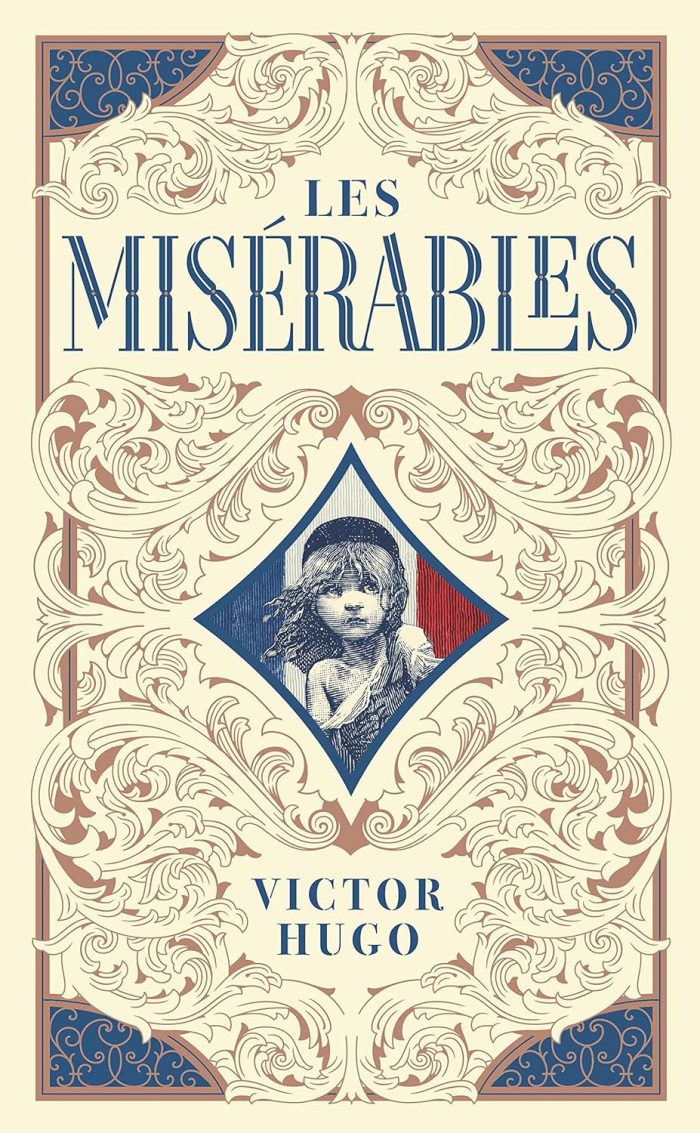
Several years ago, I did another hard thing. I determined to read Les Miserables by Victor Hugo all the way through, unabridged. Hugo is a hard author to read. He spends pages on scenes and backstories that make you wonder how they could possibly tie into the story. For example, in the volume I read, there were forty pages on the Battle of Waterloo. Good stuff, but why? I kept thinking – until I reached the end of those forty pages and found the connection. Wow. It took me exactly six months to finish Les Miserables. When I finished it, I felt like I had lost friends. I kept reliving my favorite scenes and talking about them to anyone who would listen. It was the hardest book I’ve ever read, and it was totally worth it.
So, what hard book is on your shelf? Pick it up; determine to finish it, no matter how long it takes.
Do you have a story in your head? Write it down. Put it on paper before you forget. Determine to tell your story, no matter how long it takes you to finish it.
Sure, you’re busy. So am I. I’m writing my novel on lunch breaks and late at night. Tolkien went to war. Anna Sewell was bedridden and died young, never knowing how dearly the world would love her one novel, Black Beauty. You may not have tomorrow, or you may have a thousand tomorrows. It doesn’t matter until you determine to do that hard thing.
Paint a picture. Join a choir. Learn an instrument. Audition for a play.
Don’t worry about how long it will take or how tiring it is. It took Hugo sixteen years to write Les Miserables. Tolkien wrote The Hobbit in less than three years, then it took him twelve more years to write The Lord of the Rings. But both finished, and both are loved by the world for their works.
Your reward may not be world renown, but you can still have the reward of knowing you did something hard, and you finished it.
And so I say again: Do something hard.
Oracular – uttering oracles; having the nature of an oracle (a divine announcement)
“Patience!” whispered the oaks from oracular caverns of darkness:
And, from the moonlit meadow, a sigh responded, “Tomorrow!”
Henry Wadsworth Longfellow, Evangeline
Cidevant – former, recent, previous
“Much they marvelled to see the wealth of the cidevant blacksmith,
All his domains and his herds, and his patriarchal demeanor.”
Henry Wadsworth Longfellow, Evangeline
Thole – a pin, or either of a pair of pins, made of metal or wood and set vertically in the gunwale of a boat to serve as a fulcrum for an oar
“After the sound of their oars on the tholes had died in the distance…”
Henry Wadsworth Longfellow, Evangeline

Hi! I'm Cadie. Welcome to my Collection of Bookish Thoughts where I will share with you everything I love about books.