sharing my love of books with you

Tag: New Words (Page 17 of 20)

Iconoclast

Here is an interesting word in one of my favorite of The Greatest Adventures of Sherlock Holmes. In “The Six Napoleons”, Holmes utters this word when he is told of three busts of Emperor Napoleon being smashed in the night.

Iconoclast – a person who attacks cherished beliefs or institutions or destroys images such as those used in worship

Usage: “Considering how many hundreds of statues of the great Emperor must exist in London, it is too much to suppose such a coincidence as that a promiscuous iconoclast should chance to begin upon three specimens of the same bust.”
Illimitable

Here is another fun word from The Complete Casebook of Herlock Sholmes. “The Case of the Airman’s Medal” is solved and Sholmes and Jotson are returning to their rooms in Shaker Street. As Sholmes reiterates how he tracked down the missing medal, Jotson cries, “Marvelous!” Sholmes’ reply includes this word.

Illimitable – without limits or an end

Usage: “Not at all!” said Sholmes as we re-entered his room. “To a man of my illimitable deductive powers such work is child’s play!”

Masticate

Here is an interesting word that I found In “The Case of the Airman’s Medal” from The Complete Casebook of Herlock Sholmes. I should have known what it meant by the context, but I was completely puzzled ’til I looked it up.

Masticate – chew (food)

Usage: “You imagine I have bitten off more than I can conveniently masticate.”

An interesting side note: This is the only story listed for 1919 in The Complete Casebook. I wonder if Mr Hamilton took a break from writing about Sholmes just like Sir Arthur Conan Doyle did with Holmes.

Plover & Curlew

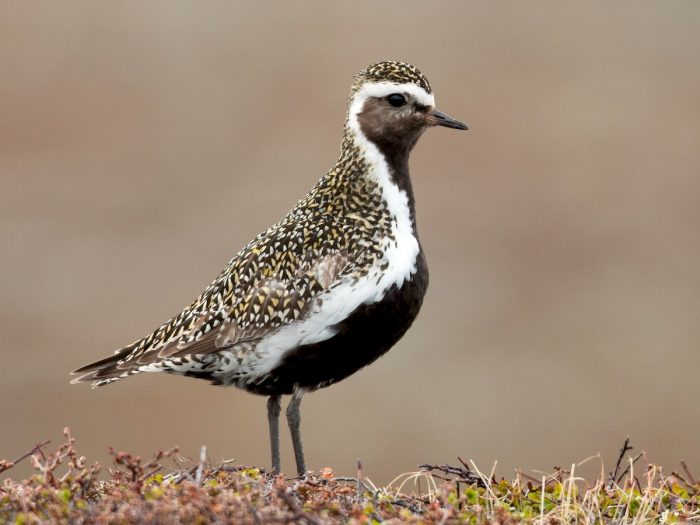
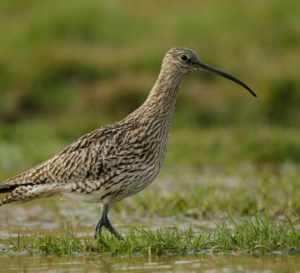
Here is another example of wildlife that Sir Arthur Conan Doyle was most likely very familiar with, but I was not. I decided it would be nice to add pictures of these birds so you can see them too.

European Golden Plover, photo credit eBird.org
Curlew , photo credit Discover Wildlife

These are mentioned in “The Priory School” in The Greatest Adventures of Sherlock Holmes when Holmes is explaining a map of the moor to Watson. “A few moor farmers have small holdings, where they raise sheep and cattle. Except these, the plover and the curlew are the only inhabitants until you come to Chesterfield high road.”

Dolorously

This descriptive word was found in the first paragraph of “The Priory School” in The Greatest Adventures of Sherlock Holmes. The definition surprised me a little, but it makes sense now that I have read the story.

Dolorous – causing, marked by, or expressing misery or grief

Usage: “The heavy, white face was seamed with lines of trouble, the hanging pouches under the closed eyes were leaden in color, the loose mouth drooped dolorously at the corners, the rolling chins were unshaven.”

Dr Watson is describing a man who staggered up the steps at their Baker Street rooms and collapsed at the door in anguish. Why? You’re going to have to read “The Priory School”.

Ostler

Here, I think, is an old word that we don’t use much anymore. I wasn’t very sure what it meant exactly when I read it in “The Solitary Cyclist” in The Greatest Adventures of Sherlock Holmes, so I had to look it up. However, I am not regularly around stables or people who deal directly with horses, so this word may still be used regularly in some circles.

Ostler – one who takes care of horses and mules (according to Merriam-Webster, it is “less common variant of hostler”)

Usage: Holmes sent the ostler to fetch the constables, glad he had not suffered ill-effects from an earlier club to the head.

Greensward

I found this word in “The Solitary Cyclist” in The Greatest Adventures of Sherlock Holmes. I should have guessed the meaning by the context, but its so simple, and I had no clue.

Greensward – grass-covered ground (see? simple)

Usage: “We had broken suddenly into a lovely glade of greensward surrounded by ancient trees.”

(You will have to read “The Solitary Cyclist” to find out why Holmes and Watson were breaking so suddenly into a grassy area. It’s part of the plot twist of the story.)

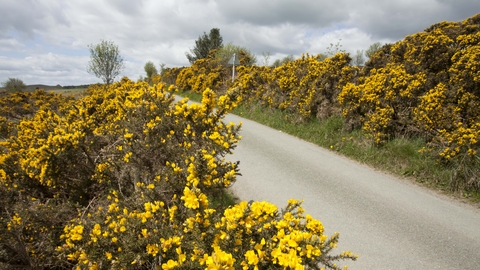
Flowering Gorse

As I was reading “The Solitary Cyclist” in The Greatest Adventures of Sherlock Holmes, I realized it would be nice sometimes to include pictures of the flowers or birds that Watson describes. As an American, I don’t usually get to see the same kind of wildlife that Sir Arthur Conan Doyle saw everyday. Pictured below is the Common Gorse, or as Watson called it, the Flowering Gorse. Picture credit goes to The Wildlife Trusts.

Gorse (Ulex europaeus) growing alongside country lane, Shropshire, UK

Usage: “A rainy night had been followed by a glorious morning, and the heath-covered countryside, with the flowering gorse, seemed all the more beautiful to the eyes which were weary of the duns and drabs and slate grays of London.”

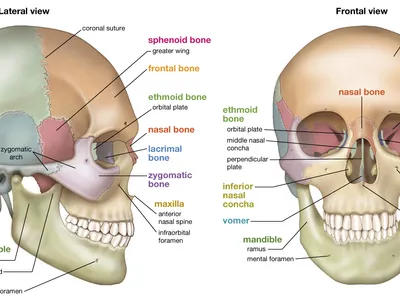
Zygoma

Here is an anatomical word from Speaking in Bones. Since I wasn’t sure exactly what this was, I looked it up and decided to share.

Zygoma – the bony arch of the cheek formed by connection of the zygomatic and temporal bones

Usage: “I suffered a concussion and a hairline fracture of my right zygoma.”

I’m including a diagram to help with placement. I hope you don’t think it’s too gross. Photo credit Britannica.com.

Untoward

The curious case of “The Solitary Cyclist” developed into an actual tale of crime and had a twist that I didn’t see coming. This is one of The Greatest Adventures of Sherlock Holmes. I didn’t foresee the ending, but Holmes did, and used this word to describe what he was anticipating.

Untoward – unexpected and inappropriate or inconvenient

Usage: “I think, Watson, that we must spare time to run down together on Saturday morning and make sure that this curious and inclusive investigation has no untoward ending.”

« Older posts Newer posts »